
Last-Minute Staffing: A Client Needs 20 Workers Tomorrow
Last-minute staffing can put an operations team under immediate pressure. See what happens between the client request and getting the right workers confirmed, compliant, on site and ready to work.
“Can you get another 20 workers on site tomorrow morning?”
The client calls. They have an unexpected increase in workload and need 20 additional people tomorrow. The deadline is close, but the real challenge is not simply finding 20 names.
An urgent staffing request is more than a numbers problem
When a client suddenly asks for another 20 workers, the first question may seem simple: who can work?
But staffing and labour-hire teams need to answer several questions almost at the same time. Who is available? Who has the right skills? Are their qualifications current? Are they already booked elsewhere? Who has accepted the shift? And does everyone know exactly where to go tomorrow?
When that information is spread across spreadsheets, messages, phone calls and separate systems, filling an urgent staffing request can quickly become an administrative race against the clock. That is the operational pressure behind last-minute staffing.
Fill the client's requirement quickly without losing visibility over worker suitability, compliance, scheduling, communication, attendance or timesheets.
Before anyone is scheduled, operations needs the right information
Finding 20 people is not the same as finding 20 suitable people. Before workers are offered the job, the operations team may need to consider:
- Who has indicated they are available to work
- Who is close enough to reasonably attend the site
- Who has the required skills, experience or qualifications
- Whether required licences or compliance documents are current
- Whether anyone is already assigned to another shift
- Whether workers have enough rest between existing shifts
- Which workers have previously performed similar roles
- How many positions still need to be filled
This is why workforce visibility matters in last-minute staffing. The less time the team spends searching for information, the more time it can spend actually filling the requirement.
For U.S. staffing teams, worker safety still matters when shifts are filled quickly. OSHA provides guidance for staffing agencies and host employers on protecting temporary workers and coordinating workplace safety responsibilities. Read OSHA's temporary worker guidance .
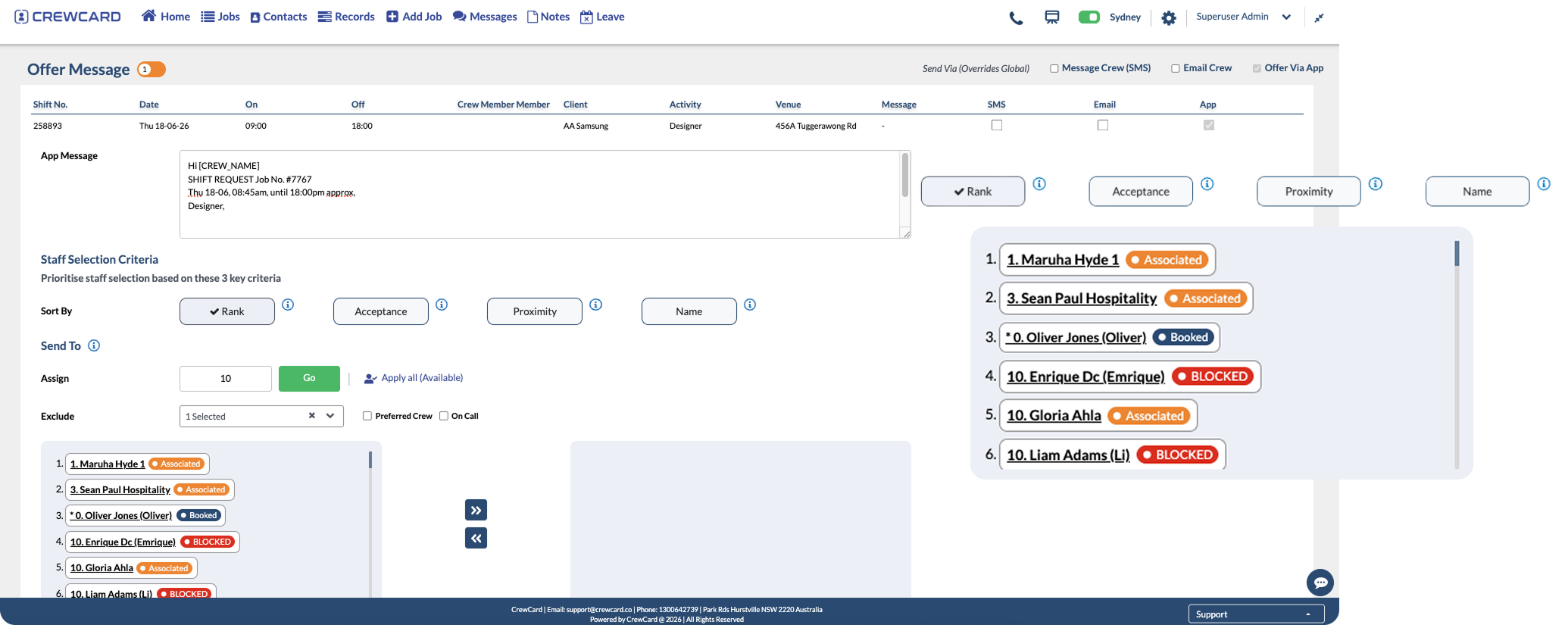
What happens next? The last-minute staffing workflow
A last-minute booking becomes easier to manage when each stage of the staffing process is connected. Here is what the workflow can look like from the moment the request comes in.
Confirm exactly what the client needs
Start with the essentials: number of workers, job location, start and finish times, required roles, skills, clothing or PPE, site instructions and any special conditions.
Find workers who are actually available
The scheduling team needs to identify suitable workers who have availability for the requested time.
Check skills, qualifications and compliance
Availability alone is not enough. Workers may require specific skills, licences, inductions, certifications or other compliance documents.
Check existing shifts and scheduling conflicts
Schedulers need visibility over each worker's existing commitments to help prevent clashes and double bookings.
Send the shift to suitable workers
Workers can review the job information and respond while operations monitors who has accepted.
Track confirmations and fill the remaining gaps
If 14 workers accept, the team can immediately focus on the six remaining positions.
Make sure every worker has the correct job information
Confirmed workers need access to the address, start time, meeting point, role details, PPE requirements and site instructions.
Track attendance, hours and timesheets after the shift
Operations may need to track attendance, review hours, approve timesheets and prepare information for payroll and client invoicing.
Where the manual process starts to break down
Last-minute staffing magnifies small inefficiencies. A process that feels manageable for five workers can become difficult when the client suddenly needs 20, 30 or 50 people.
“Who can actually work?”
Staff availability may be hidden across spreadsheets, messages and conversations.
“Are they cleared for this job?”
Operations may need to search separate files to confirm licences and qualifications.
“Have we booked them somewhere else?”
Separate rosters can make clashes and double bookings harder to identify.
“How many have actually said yes?”
Calls, texts and messages can make it difficult to maintain one reliable view of confirmed workers.
What a better last-minute staffing workflow looks like
Speed does not have to mean losing control. A connected workforce process gives operations one place to understand what has been completed and what still requires attention.
Disconnected process
- Check separate staff spreadsheets
- Call or message workers individually
- Search folders for qualifications
- Compare multiple rosters for clashes
- Maintain a manual confirmation list
- Send job details in separate messages
- Re-enter hours after the shift
Connected workforce process
- View worker information in one system
- Filter suitable and available workers
- Review skills and compliance records
- See existing shift commitments
- Track confirmations against positions required
- Keep job information attached to the shift
- Connect completed shifts with timesheets
The goal is not just to fill the shift fast
When a client needs workers tomorrow, speed obviously matters. But filling the request quickly only works if the team can still maintain control over who was selected, what they are qualified to do, what they were told and what happened on the shift.
A fast process that creates scheduling mistakes, compliance issues or payroll corrections later is not necessarily an efficient one.
Tomorrow morning, the question changes
By the time the shift begins, the question is no longer: “Can we find 20 workers?”
It becomes: “Did all 20 workers arrive?”
Operations teams may need visibility over attendance, check-ins and shift activity so problems can be identified early.
Tools such as mobile check-in, location records and time clock software can help connect the rostered shift with what actually happened on site.
The staffing request does not end when the shift finishes
After the job, actual hours may still need to move through a review and approval process before payroll or invoicing can be completed.
- Record actual start and finish times
- Review breaks and worked hours
- Correct legitimate timesheet differences
- Obtain supervisor or client approval where required
- Prepare approved hours for payroll
- Use accurate shift data for client invoicing
Connecting scheduling and timesheets reduces the need to recreate the same shift information after the work has already been completed.
How CrewCard helps with last-minute staffing
CrewCard brings key parts of workforce management into one platform, helping staffing and labour-hire teams manage urgent requirements without relying on disconnected spreadsheets, calls and messages.
Worker availability and scheduling
See workforce information and allocate suitable workers to upcoming jobs and shifts.
Skills and compliance
Keep qualifications and compliance information connected to worker profiles.
Recruitment and onboarding
Manage the process of getting applicants and new workers ready for available work.
Shift communication
Keep workers informed about job details, schedules, locations and operational instructions.
Timesheets and approvals
Capture worked hours and manage timesheet review before payroll.
Payroll and invoicing workflows
Keep workforce information connected with the processes that happen after the shift.
CrewCard has been developed around real labour-hire operations managing large casual workforces, where last-minute client requests, schedule changes and short-notice staffing are part of everyday workforce management.
Who benefits from a faster staffing workflow?
A connected last-minute staffing process is particularly useful for businesses that regularly need to mobilise casual, temporary, contract or field-based workers at short notice.
- Labour-hire and staffing companies
- Event and venue staffing teams
- Hospitality staffing businesses
- Cleaning and facilities workforces
- Security teams
- Construction and trades labour
- Traffic management businesses
- Field service and mobile workforces
Could your team fill 20 positions tomorrow?
For many staffing businesses, the challenge with last-minute staffing is not a lack of workers. The challenge is being able to quickly identify the right workers, confirm they can take the job and keep every part of the process organised.
If an urgent request still requires multiple spreadsheets, phone calls, message threads and manual updates, the administration can grow almost as quickly as the client's workforce requirement.
The right staff scheduling software can help operations teams move from client request to confirmed workforce with clearer information at every stage.
When the next urgent request comes in, be ready
CrewCard helps workforce teams manage worker availability, scheduling, compliance, shift communication, attendance and timesheets from one platform.
Request Demo